

This World Environment Day (5 June), organisations across the globe are sharing their advancements in enhancing climate resilience and sustainable living, and Queens’ College is proud to share our own milestones and goals to support these aims, which include co-living, decarbonisation, and a 51% biodiversity boost.
5th June 2026
Adjacent to the Paradise Nature Reserve, our Owlstone Croft postgraduate site is at the heart of our most ambitious environmental initiative yet. As part of the College’s committed pathway toward an entirely net-zero educational estate, the ongoing development at Owlstone Croft serves as a comprehensive blueprint for future sustainable living. By combining cutting-edge Passivhaus Classic co-living designs, complete site-wide electrification, and an updated, extraordinary 51% Biodiversity Net Gain target, we are creating a community where student life and the natural world can flourish together.
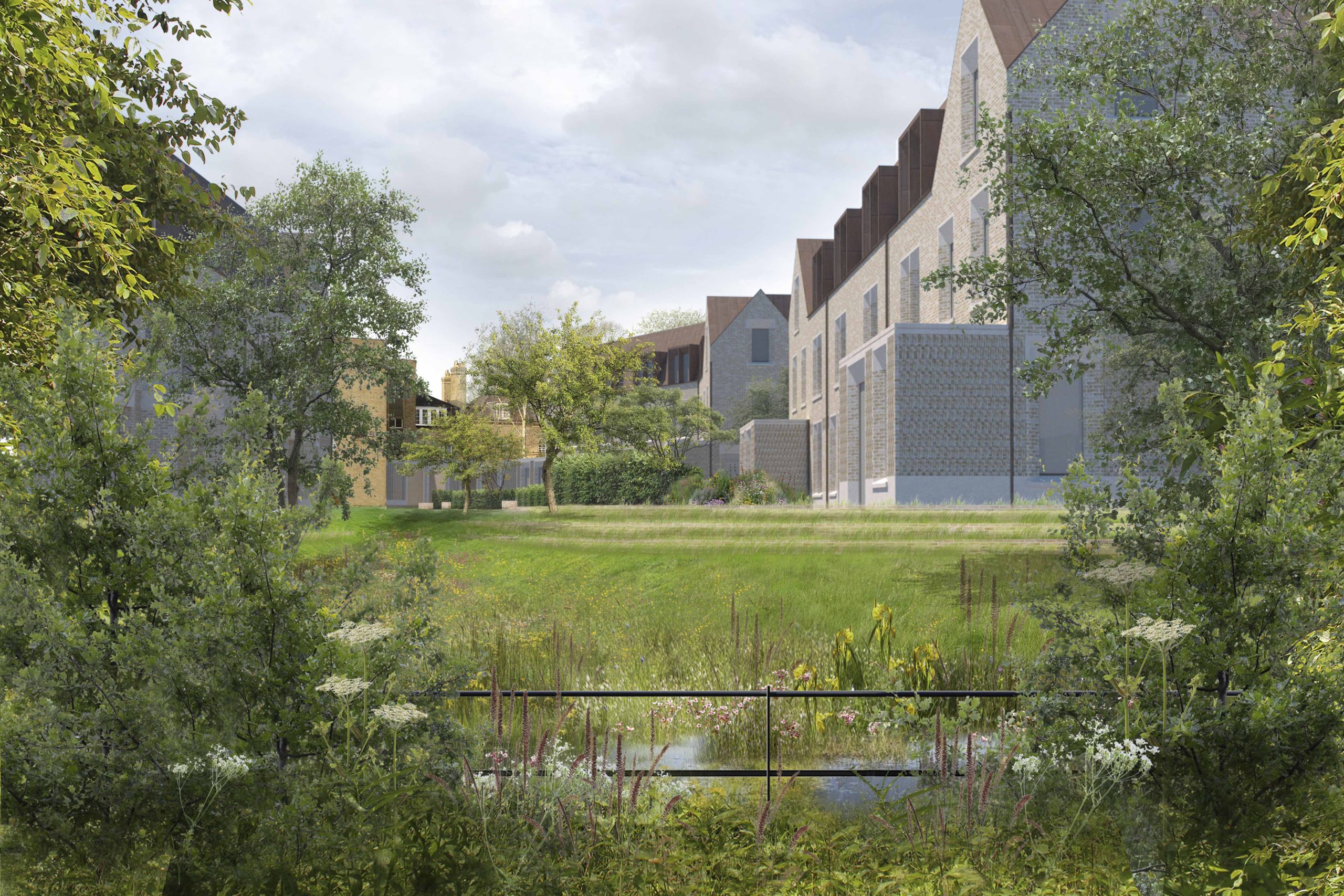
Vision design of the new Owlstone Croft terraces
The centrepiece of the new development consists of four student residential terraces designed to the prestigious Passivhaus Classic standard. Rather than traditional halls, these terraces utilise an innovative co-living home layout. Each unit features a shared kitchen and social living space serving 4 to 5 Postgraduate student suites, which comprise private bedrooms, integrated open-plan study areas and en-suite bathrooms.
By prioritising ultra-high-performance thermal insulation, eliminating cold bridging, and meeting a strict airtightness target, these buildings will retain heat exceptionally well. Combined with high-efficiency Mechanical Ventilation with Heat Recovery (MVHR) systems, they require a fraction of the heating energy used by traditional student housing, stopping carbon emissions before they are even created.
While the new build structures showcase modern engineering, the existing site properties are undergoing a comprehensive green retrofit, saying goodbye to fossil fuels. Historically, burning natural gas for space heating and domestic hot water accounted for more than 80% of the site’s total carbon footprint. To break this reliance on fossil fuels, Queens’ College is executing a complete degasification strategy across the estate.
Legacy gas boilers are being entirely decommissioned and replaced by cleanly powered Air Source Heat Pumps (ASHPs). Operating at efficiencies exceeding 300%, these heat pumps pull warmth from the air to support the site’s heating and hot water demands. This fully electrified energy model will be supported by an expansive solar photovoltaic (PV) panel array on the roof of Block B, driving the site closer to operational net-zero.

Owlstone Croft shares a direct boundary with the Paradise Nature Reserve, so preserving and enhancing local ecology is just as critical to us as reducing carbon emissions. Working alongside specialised environmental consultants, our updated masterplan is on track to deliver a 51% Biodiversity Net Gain in land habitats alongside a massive 73% Net Gain in hedgerows.
To blend our borders seamlessly into the adjacent reserve, traditional lawns are being replaced by pollinator-friendly “bee lawns” and species-rich damp neutral grasslands. These natural areas are graded to act as a Sustainable Drainage System (SuDS). Instead of overwhelming local infrastructure, rainwater surface runoff will filter naturally through these grasslands and into our boundary waterbody, recharging the ecosystem.
The site’s boundaries and historic native hedgerow line will be reinforced with a thick understorey of native scrub. New native trees are also being planted between the buildings, and the building itself will feature integrated nesting boxes for native bird and bat species, alongside biodiverse green roofs and rain gardens.
Long-term sustainability requires a partnership between infrastructure and community, so every aspect of daily life at Owlstone Croft is designed to encourage eco-conscious routines:
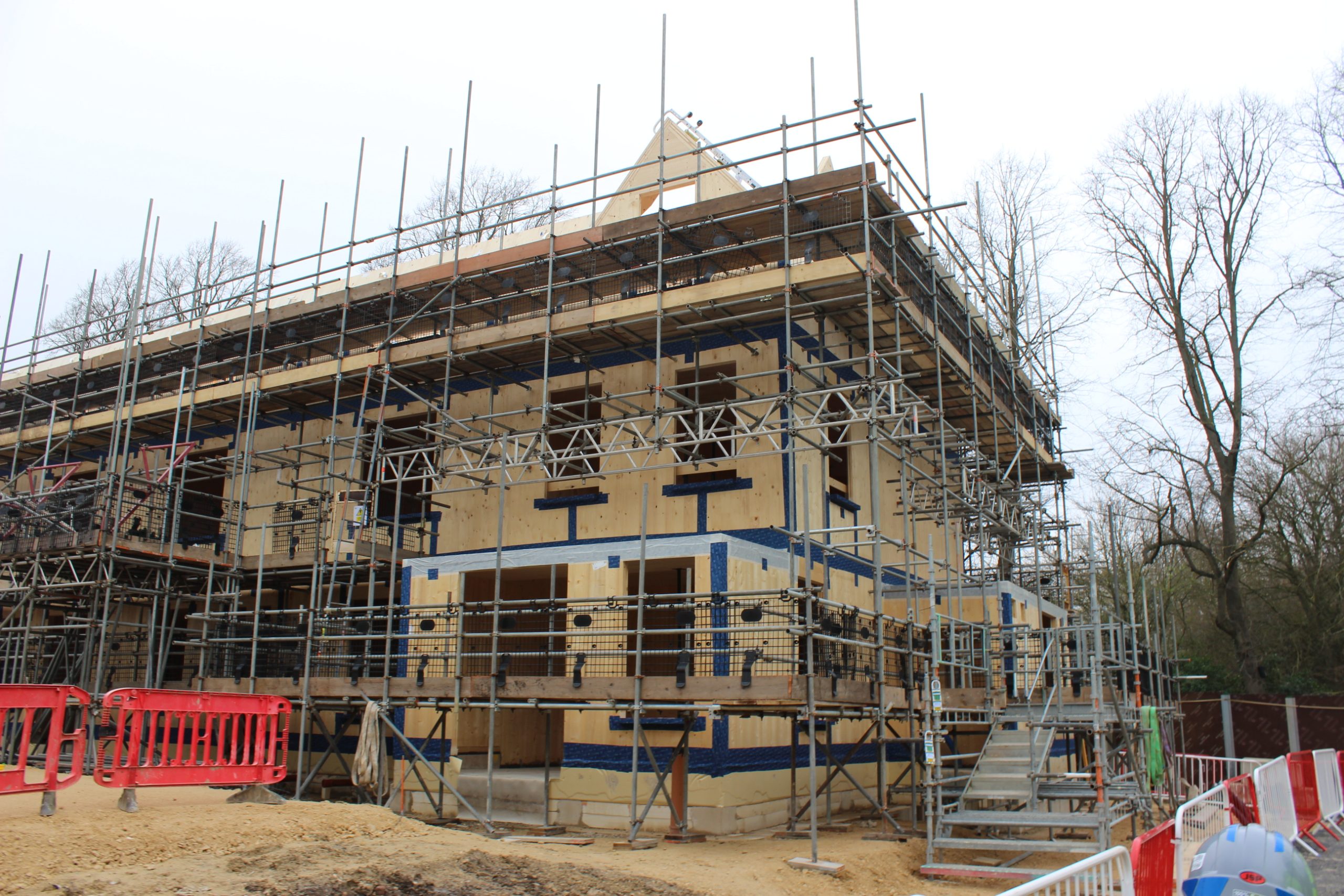
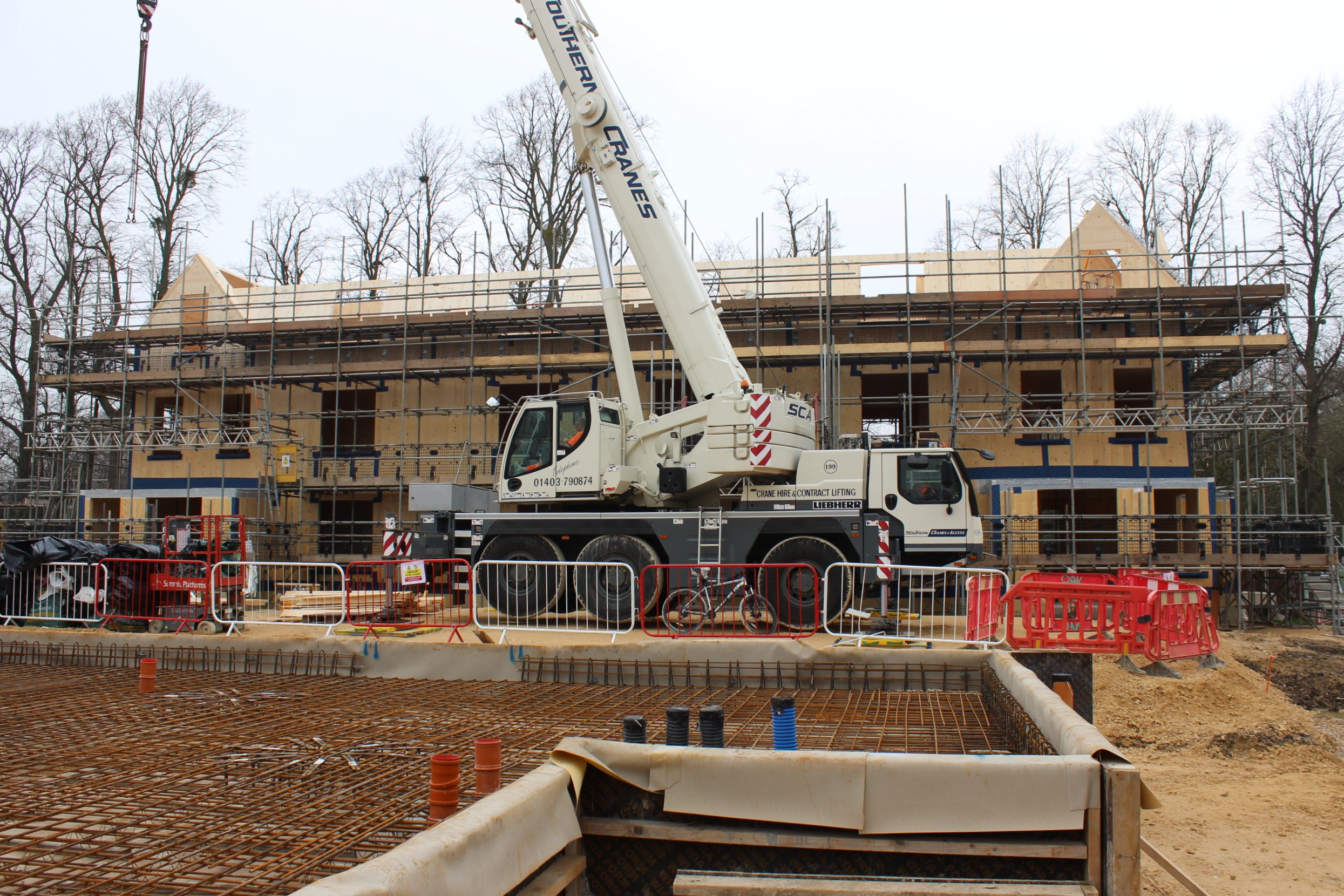
Even the construction phase is operating responsibly, with contractors utilizing a strict Resource Management Plan (RMP) targeting the diversion of 95% of non-hazardous project waste away from landfills, while sourcing local suppliers to keep the delivery chain tightly contained within regional networks.
From the foundational design of its Passivhaus terraces to the improved wildlife corridors along its perimeter, the transformation of Owlstone Croft represents a defining step forward for Queens’ College. This World Environment Day, we are proud to show how a historic College estate can evolve and work towards global shared goals of climate resilience and sustainable living for generations to come.
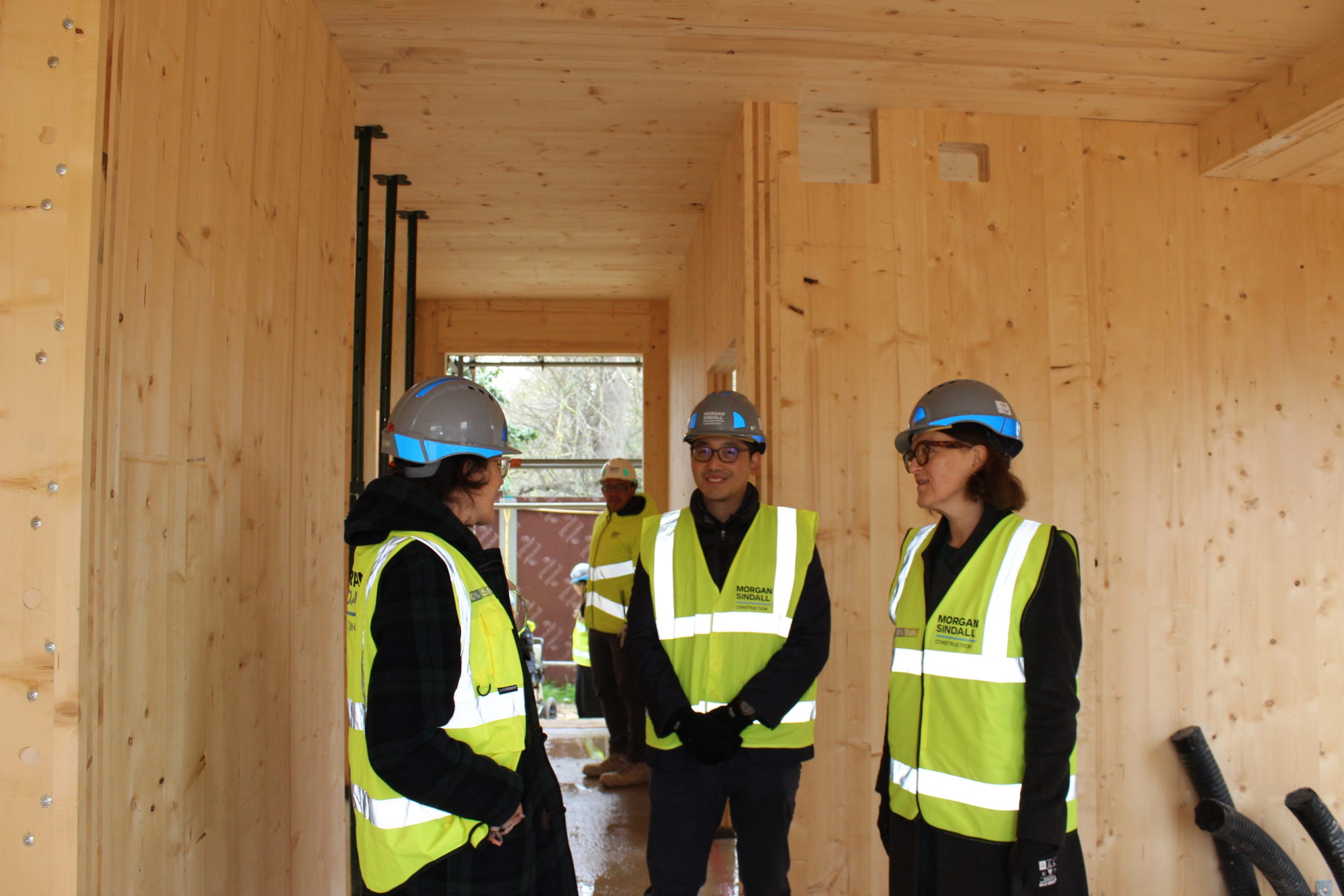

Last week, we marked a major milestone at Owlstone Croft with a topping out ceremony, celebrating the structural completion of the first new postgraduate accommodation terrace.
5th October 2026

We are pleased to share that we are now over halfway through our ambitious transformation of Owlstone Croft. With one year of the work completed and one more to go, we wanted to take this opportunity to reflect on the progress so far and look ahead to what the completed development will offer our students and the wider College community.
24th September 2026

Before we launch into an exciting new academic year, here are a few things that happened over the summer that you might have missed.
28th August 2026

We are delighted to share that Professor Marie Edmonds, FRS, has been appointed as the next Head of the School of the Physical Sciences.
25th August 2026


Site Search