

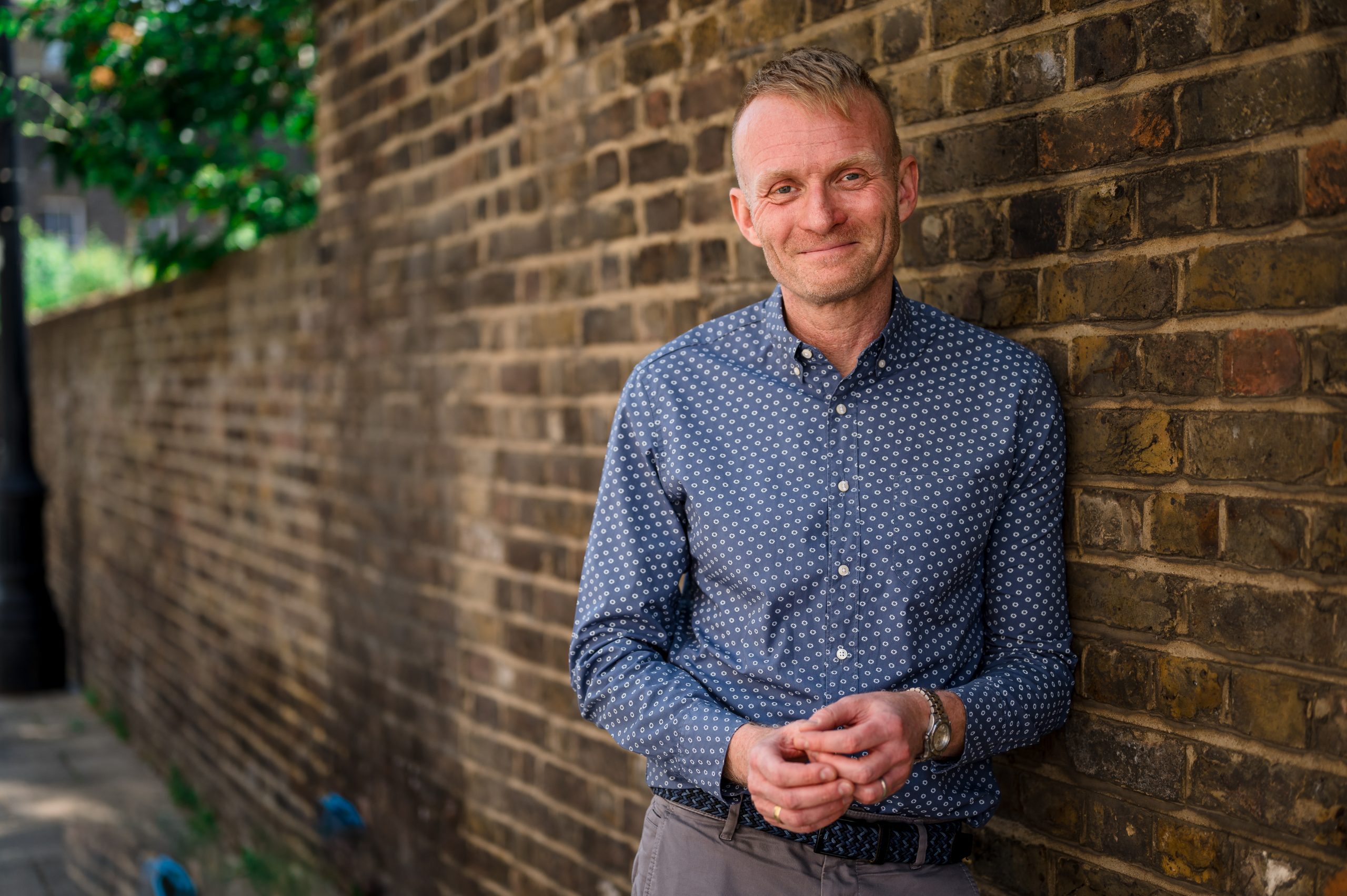
Recognised in the New Year’s Honours list with an MBE for services to LGBTQ+ Culture, Matt Cain (1994) is a writer, broadcaster, and a leading commentator on LGBTQ+ issues. In August, he spoke with Abii from our Alumni & Development Office about his career, activism, and memories of life in Cambridge.
7th November 2025
“My creativity was unlocked at Queens’… I still feel like I’m coming home when I go back.”
Growing up in the working-class north, we didn’t hear about open days at my state school, and the whole culture of open days wasn’t as big of a thing. So, I came down to Cambridge for a day and walked around the Colleges by myself. There was no one to speak to, but when I stepped into Queens’, I felt an emotional connection. It felt like I was in the right place, and I was absolutely right.
I had been ostracised for my sexuality in my youth, and it was exhilarating and a huge relief that this wasn’t an issue at Queens’. It wasn’t just amongst fellow students, but the porters and the bedders; everyone knew who I was. It was 1994, you couldn’t take it for granted that you would be accepted, but I was open about who I was from the start, and I felt like I was celebrated. I felt like it was one of the things people loved about me.
That being said, the experience that I’d had at school was so completely different to the Cambridge experience that I sometimes felt all at sea. But I don’t think Queens’ could have done any more—I think that was just inevitable with the way the country was set up. Back then, the standard offering of mental healthcare was basically rock bottom, but at Queens’ it was very good. My tutor, Rod Jones (Life Fellow), was brilliant; he was always looking out for me, as were the porters. We had the nurse, Mairi Hurrell, who everybody loved, and I went to see on many an occasion.

I felt welcomed into a warm embrace that was entirely at odds with my previous experience of education. I can say it was possibly the most positive and fulfilling experience of my life, and it made me who I am today.
I had absolutely no idea what I wanted to do as a career when I started at Queens’. I often say in interviews now that I always knew I wanted to be a writer, but I didn’t know how to do it. That’s not quite true. There’s a saying, “If you can’t see it, you can’t be it,” and I didn’t know anybody, not even in the outer fringes of my community, who made a living from writing. It just didn’t occur to me that I could do it.
When I got to Cambridge, things like film and TV, making short films, were still quite inaccessible. This was before the digital revolution, so if you were creative, you were drawn towards student theatre, which I did and loved. I directed a May Week production at Queens’ and did a show in the Fitzpat. It was all brilliant, and by the time I left four years later, I knew I wanted to do something creative.
I started out my career making documentaries at ITV, when the big trend was for access docs, where a filmmaker has a small camera, follows around a subject and gets under their skin. I did three, but one in particular is probably my proudest moment with ITV, which was when I followed Ian McKellen around for a year, documenting his life as an actor and activist. He came back to Cambridge, he was at Catz, and he did a talk there. It was a real privilege to do that, and we’ve stayed in touch.
I left ITV after ten years and was approached by a head-hunter for ITN, who make Channel 4 News. They wanted a journalist from a non-conventional background who wasn’t a typical news journalist. They certainly got that with me; I wasn’t even a journalist! But I had specialist knowledge in the arts and culture, and I knew lots of people in that world. Channel 4 has a public service remit to represent minorities, to be the voice of people who don’t always see themselves on screen. Dorothy Byrne (President, Murray Edwards) was the Commissioning Editor for News and Current Affairs at the time. She changed my life. She wanted somebody on screen who was different and could appeal to minorities, and she felt very passionately about arts and culture news reporting, so she hired me. I would never have put myself forward for the cut-and-thrust of the daily newsroom, but they said that they wanted somebody who was going to break the mould, and that appealed to me.
It wasn’t always easy. Newsrooms are competitive, fast-moving places. Now that I know I’m autistic, I know I like routine and I’m not very good with surprises, which are a constant in a newsroom. I didn’t realise any of that back then, but I loved that job, it was brilliant, and it definitely opened doors.
I’d met and interviewed writers and agents with ITV, and at Channel 4, I made sure that whenever there were any publishing or literature stories, I was there. I could see a path, and I don’t mind admitting that part of me accepting the job at Channel 4 was that I knew it would set me up. When I left after three years, I had my book deal and it felt like the right time for me to move on.
I’ve always had a passion for social justice, and I was appalled by the state-sanctioned homophobia in Russia. I went on an undercover mission to Russia to write an article for The Guardian and I was terrified, but I was also appalled. I remember signs in shop windows that said, ‘No gays in here,’ and all the activists that I spoke to had been beaten up, ostracised from their families, or kicked out of their homes. I felt really passionate about reporting on it, but I didn’t really sleep while I was there. I remember getting on the plane home and being grateful to be out of there without having been arrested.
I got an email from the Foreign Office a few days after I got back, and I was called into Downing Street and met with three people from the Foreign Office who all had codenames. They told me they thought what I did in Russia was great, and they were really glad I did it, but they told me I can never go back to Russia again because I would not be safe.
I won’t be going back, and I don’t want to, but I felt really passionate about it. I do feel frightened by things, but I never let it stop me.
I’m a patron of LGBTQ+ History Month, who approached me, and an ambassador for Manchester Pride, who I got in contact with when I was the Editor-in-Chief of Attitude. It’s my home city, I love it, and I felt it needed more presence in the magazine. One Love is actually set over the Manchester Pride long weekend.
I’m also an ambassador for the Albert Kennedy Trust. I got a press release from them while I was at Attitude that said that, at the time, 25% of young people who were homeless identified as L, G, B, T, or Q, and the national average of gender or sexual non-conformity was 1-2%, so I wanted to draw attention to it. I went out with some frontline workers and I slept rough on the streets and spent another night in a homeless shelter, and I wrote about it. When you hear about these things, if you want to make a difference, you have to do something.
Receiving an MBE
I had people come to me on the day I received my MBE and ask if this was a dream come true. The truth is, it was beyond that. When I was growing up, gay men were social pariahs. People thought they were dangerous, disease-carrying predators who couldn’t be trusted; they weren’t celebrated, they were hid away in shame. Nobody was awarded Honours. I was very pleased that mine wasn’t for services to the Media or services to Literature; it was services to LGBTQ+ Culture. It had been such a battle to get published and to get my books through to mainstream audiences – I had to crowdfund to publish The Madonna of Bolton – so it was great to get recognition for that.
When you’ve always had to fight and fight for things, and you’re used to being disrespected and having to prove yourself, it’s quite difficult to sit back and enjoy things when you get to the place you were working towards. I was in my 40s by that stage, and I could never take it for granted, and you’re worried it can be taken away from you.
It was a gradual process, but my creativity was unlocked at Queens’, and I then worked towards the role I wanted, albeit meandering through other industries. My novel, The Madonna of Bolton, tells that story: someone who wants to be a writer but doesn’t know how to do it. A large part of it is set in Queens’. He goes to a fictionalised College called St Cristopher’s… but it’s Queens’, really. There’s no attempt to hide that in the description!
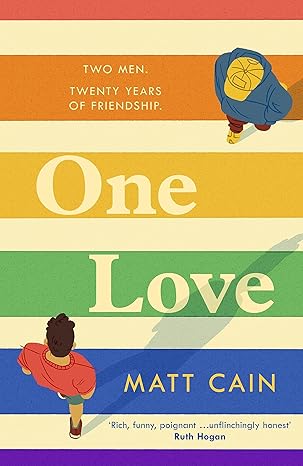
The fictional college was named after my best friend from Queens’, who was my best man when I got married, and my three maids of honour were all friends from College as well. The dedication for my most recent novel, One Love, which was also heavily inspired by my time at Queens’, reads ‘For Laetitia Clapton, Amy Rynehart and Bianca Sainty 14-04 for ever!’ They were my three best girlfriends at College, and the secret number in the dedication is for our favourite song on the jukebox in Queens’ bar – Club Tropicana by Wham!
I had a great time at Queens’, it led me to becoming a writer, and it’s where I found my voice. I still feel like I’m coming home when I go back.
A version of this article, written by Abii Proudfoot, appeared in the Autumn 2025 issue of The Bridge under the headline: If you can’t see it, you can’t be it
Matt’s most recent novel, One Love, is available now in all formats.

Before we launch into an exciting new academic year, here are a few things that happened over the summer that you might have missed.
28th August 2026

Congratulations to our Postgraduate students who graduated on the 23rd July 2026.
24th July 2026

We’re proud to see Professor Ibata recognised among this year’s Kavli Prize laureates for the lasting impact his work has left on the field of astrophysics.
12th June 2026

Congratulations to our Postgraduate students who graduated on the 22nd May 2026.
7th June 2026


Site Search