

30th October 2024
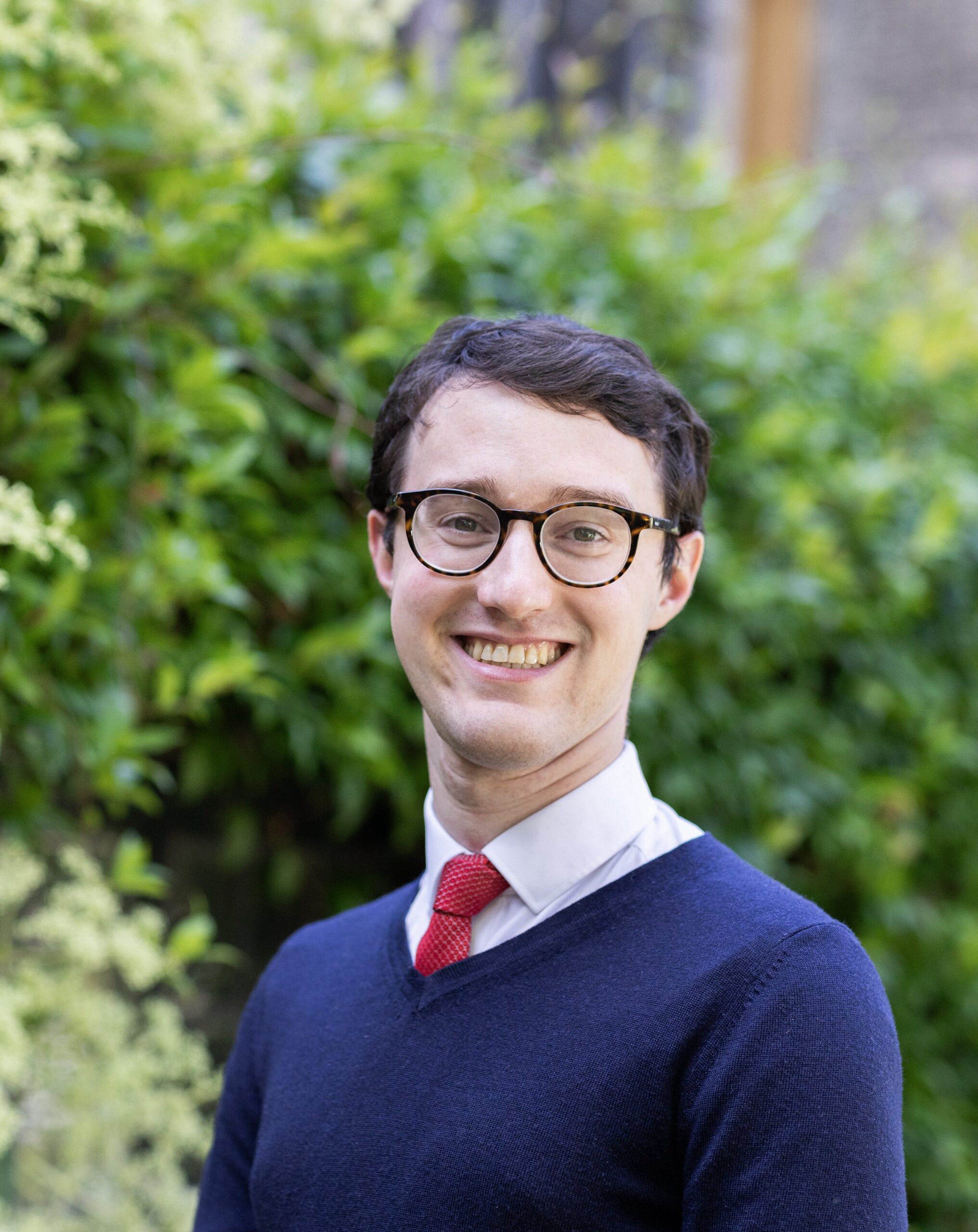
Eamonn O’Keeffe, a Junior Research Fellow in History at Queens’ College, argues that regimental bands first experimented with all-brass formats in the aftermath of the Napoleonic Wars.
Military musicians returning from the Napoleonic wars established Britain’s first brass bands earlier than previously thought, new research reveals. The study undermines the idea that brass bands were a civilian and exclusively northern creation.
In a study published today in The Historical Journal, Dr Eamonn O’Keeffe has found compelling evidence to show that Britain’s earliest brass bands were founded by military musicians in the 1810s.
It is widely believed that brass bands originated with coal miners and other industrial communities in northern England and Wales between the 1830s and the 1850s. New evidence rewrites this history.
O’Keeffe shows that veterans of the Napoleonic wars founded many of Britain’s earliest non-military brass bands from the 1820s onwards. These ensembles often emerged far beyond the northern English and Welsh industrial communities with which they later became associated.
O’Keeffe discovered most about a band founded by James Sanderson, a Waterloo veteran, in Leamington Spa, Warwickshire. Sanderson, a former trumpet-major, publicized his ‘military brass band’ in the Leamington Spa Courier in February 1829. Surviving newspaper reports from that summer reveal that the outfit, equipped with keyed bugles, trumpets, French horns, and trombones, performed at several well-attended fetes and other events in the area.
By studying previously overlooked press reports, memoirs and regimental records, O’Keeffe reveals that once demobilized, men and boys who honed their instrumental skills in uniform embarked on a variety of civilian musical careers, becoming instructors, wind performers, composers, and even opera singers.
Many performed in an array of militia and volunteer bands that remained active long after demobilization. Others instructed or participated in a growing assortment of amateur wind and all-brass bands, which often sported uniforms and consciously emulated their regimental equivalents.
O’Keeffe said: “Brass bands enabled aspiring musicians of all ages to develop new skills and allowed people to make music as a community, learning from each other. That was the case in the nineteenth century and it’s still the case today.”
Dr O’Keeffe is writing a book about British military music during the Napoleonic Wars.
To find out more about Dr O’Keeffe’s discovery, read The University of Cambridge’s article here: https://www.cam.ac.uk/stories/napoleonic-wars-veterans-invented-britains-first-brass-bands
References
E. O’Keeffe, ‘British Military Music and the Legacy of the Napoleonic Wars’, The Historical Journal (2024). DOI : 10.1017/S0018246X24000372
Media contacts
– Tom Almeroth-Williams, Communications Manager (Research), University of Cambridge: researchcommunications@admin.cam.ac.uk / tel: +44 (0) 7540 139 444
– Eamonn O’Keeffe, Queens’ College, University Cambridge: ewo21@cam.ac.uk

Before we launch into an exciting new academic year, here are a few things that happened over the summer that you might have missed.
28th August 2026

We are delighted to share that Professor Marie Edmonds, FRS, has been appointed as the next Head of the School of the Physical Sciences.
25th August 2026

The New Whittle Laboratory at the University of Cambridge was officially opened by His Majesty King Charles III on 20 July 2026, during the Frank Whittle Summit. Dr Christopher Clark, Fellow of Queens’ College and Lecturer in the Whittle Laboratory, was among the faculty who welcomed His Majesty during the visit.
23rd July 2026

On Friday the 7th of July, Queens’ College welcomed filmmaker Mehmet Sarı for the Empowering Romeyka Voices event, a screening of two documentaries (including Sarı’s newest, The Cursed Forest) and a discussion of his work and background.
8th July 2026


Site Search